
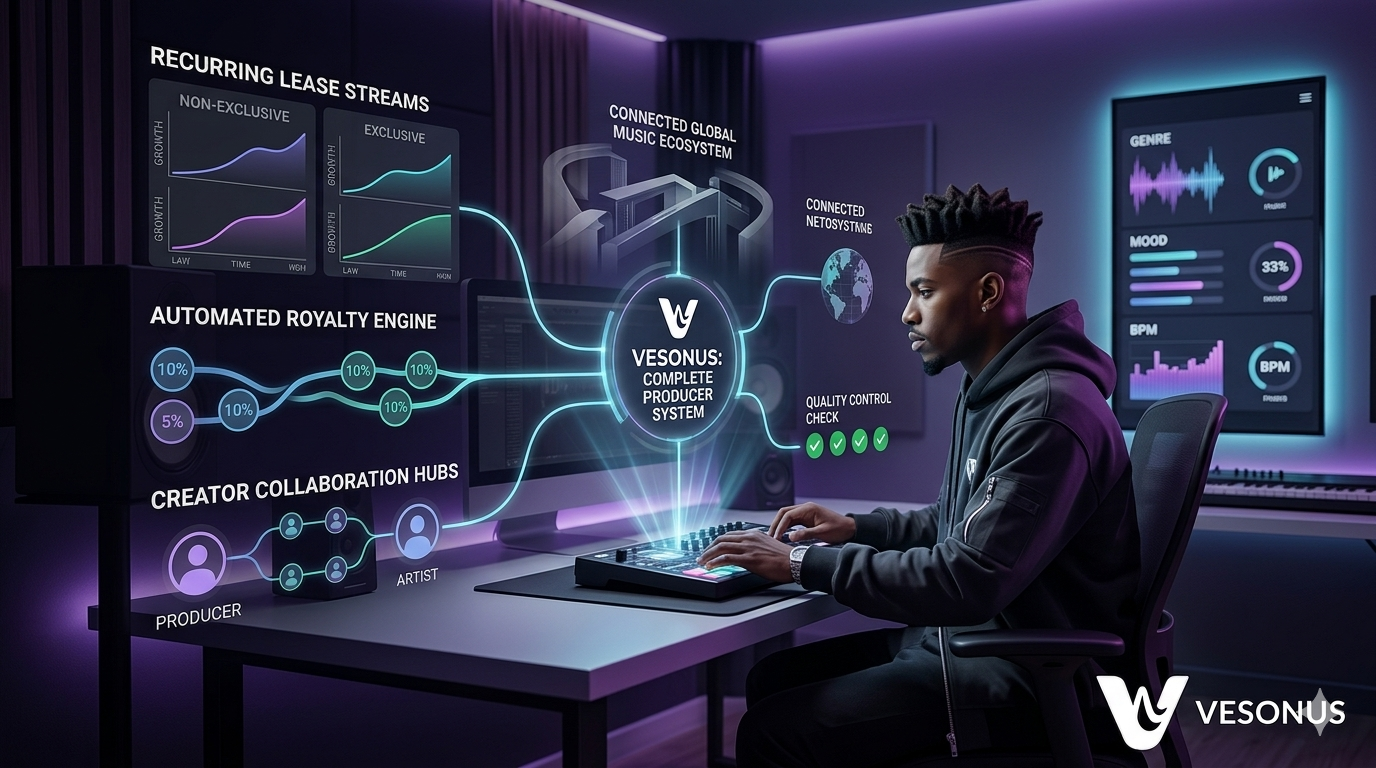
How to Sell Beats Online in 2026: The Complete Guide for Producers
Learn how to sell beats online in 2026. This complete guide for producers covers beat licensing, platforms, royalties, and marketing strategies to grow your production business.
Selling beats online is no longer just a side hustle — it is a real digital business. In 2026, simply uploading a track to YouTube or a marketplace is not enough. Producers need a clear catalog, smart licensing, searchable listings, and a platform that helps manage royalties, contracts, and collaboration.
Whether you are a beginner producer or an experienced marketplace seller looking for better alternatives, this guide explains how to sell beats online, where to sell beats, and how to build a sustainable production business.
In This Guide
In this article, you'll learn:
- what it means to sell beats online
- why selling beats is different in 2026
- how to prepare your beat catalog
- where producers sell beats today
- how beat licensing works
- how producers actually make money
- how Vesonus is different from traditional beat marketplaces
- how to optimize and promote your beats
What Does It Mean to Sell Beats Online
Selling beats online means licensing instrumentals to artists who use them for songs, content, and commercial releases.
In most cases, producers are not selling full ownership of their music. Instead, they are selling a license that gives an artist permission to use the beat under specific terms.
These terms usually define:
- how many streams an artist can generate
- whether the beat can be resold or sublicensed
- whether stems are included or only MP3 or WAV files
- whether the producer keeps ownership of the master recording
In simple terms, learning how to sell beats online means learning how to package your music as a professional product.
What Is Beat Licensing
Beat licensing is the process where a producer grants an artist permission to use an instrumental under defined terms such as file type, exclusivity, stream limits, or royalty arrangements.
That is why understanding beat licensing is essential before trying to sell beats online.
Why Selling Beats Online Is Different in 2026
The traditional Type Beat strategy still works for discovery, but it is no longer enough on its own.
For years, producers relied on search titles like:
- Drake Type Beat
- Travis Scott Type Beat
- Lil Baby Type Beat
Those keywords still bring traffic, but artists are increasingly looking for producers they can trust, not just cheap files they can download once.
Today, artists expect:
- professionally mixed instrumentals
- clear licensing agreements
- collaboration opportunities
- reliable royalty tracking
- a smoother release path after they lease a track
That shift changes the game.
Producers who win in 2026 are not just uploading beats. They are building a catalog, a brand, and a system.
Step 1: Build and Organize Your Beat Catalog
Before choosing where to sell your beats online, you need a catalog that feels professional.
Most producers should start with 10 to 15 finished instrumentals before actively pushing traffic to a profile or store.
Focus on quality over quantity.
A smaller catalog of polished, searchable, well-tagged beats will usually outperform a larger catalog of unfinished or inconsistent tracks.
Prepare Professional Stems
Serious artists often need stems for mixing and mastering.
Your beat should ideally include:
- kick
- snare
- hi-hats
- bass
- melody layers
Providing stems increases the value of your beat licenses and makes your beats more attractive to artists who want a professional release.
Use Producer Tags
Create a tagged version of each beat that includes your producer tag.
This helps protect your work while still allowing artists to preview the instrumental before licensing it.
Keep Your Catalog Consistent
A strong catalog should feel cohesive.
That does not mean every beat has to sound the same, but artists should quickly understand your strengths, your style, and what kind of records they can make with your music.
Step 2: Choose Where to Sell Your Beats
One of the most common questions producers ask is: where should I sell beats online?
The answer depends on whether you want discovery, branding, recurring income, or better control over your business.
BeatStars
BeatStars is one of the most recognized beat marketplaces.
It is strong for visibility and discovery, especially for producers who want access to a large artist audience.
Benefits include:
- large buyer ecosystem
- built-in discovery
- familiar platform for artists
- established producer community
Challenges include:
- very high competition
- harder visibility for new producers
- platform dependency
Airbit
Airbit is another popular option for producers who want flexible licensing and storefront tools.
Benefits include:
- flexible licensing options
- customizable beat stores
- established reputation
Challenges include:
- smaller discovery ecosystem than the largest marketplaces
SoundClick
SoundClick still exists as an option for niche communities, but it feels more legacy than modern.
It may still work for certain styles and audiences, but many producers now look for more up-to-date workflows.
Vesonus
Vesonus is built for producers who want more than one-time beat sales.
Unlike traditional beat marketplaces that rely mostly on single transactions, Vesonus is designed around:
- collaboration between artists and producers
- automated royalty structures
- recurring leasing income
- professional producer profiles
- a more complete release ecosystem
That makes it less of a simple beat store and more of a long-term music business platform.
Step 3: Understand Beat Licensing
If you want to sell beats online successfully, you need a licensing model artists can understand quickly.
Basic Lease
A basic lease is usually the entry point.
Typical price range:
- $20 to $50 for MP3 leases
- $50 to $150 for WAV leases
The producer keeps ownership while the artist receives permission to use the beat under defined limits.
Unlimited Lease
Unlimited leases remove stream caps or distribution caps.
Typical price range:
- $100 to $300
This model is popular because it gives artists more flexibility while still allowing producers to monetize non-exclusive tracks repeatedly.
Exclusive Rights
An exclusive license gives one artist exclusive access to the beat.
These deals usually command the highest price and are often used when the artist wants stronger control over the record.
Clear Licensing Sells Better
Many producers lose sales because their licensing is unclear.
Artists are more likely to license a beat when they understand:
- what files they get
- what rights they receive
- whether the track is exclusive or non-exclusive
- whether they can release it commercially
The easier this is to understand, the easier it is to convert listeners into buyers.
How Producers Actually Make Money Selling Beats
Many beginner producers think beat income comes from selling a track once.
In reality, producers often build multiple income streams.
Common revenue sources include:
- non-exclusive beat leases
- exclusive licensing deals
- publishing royalties
- streaming royalties from released songs
- co-production splits
- long-term artist relationships
This is why producers who understand both licensing and royalties tend to build more sustainable businesses.
Selling beats online is not only about the first transaction. It is about building repeatable music income.
How Vesonus Is Rethinking Beat Marketplaces
Most beat marketplaces are built around one-time beat sales.
A producer uploads a beat, sells a license, and the relationship often ends there.
Vesonus takes a different approach by building around long-term collaboration, recurring leasing, and music that continues earning after release.
A Clearer Positioning
Unlike traditional beat marketplaces that focus mainly on one-time sales, Vesonus is built around recurring leases and long-term collaboration between artists and producers.
That positioning matters because it changes what success looks like.
Instead of chasing only one large sale, producers can build recurring monthly income and stay connected to the full release journey.
Quality-Controlled Music Catalog
One major problem with beat marketplaces is inconsistent technical quality.
Vesonus introduces a technical quality control system that checks tracks for:
- mix balance
- audio quality
- technical production standards
The system does not judge genre or taste. It focuses on whether the track meets a professional technical standard.
That gives artists more confidence when browsing the catalog.
A Platform for All Genres
Many beat marketplaces are heavily associated with hip-hop and trap.
Vesonus takes a broader approach and welcomes producers across genres such as:
- pop
- electronic
- afro
- cinematic
- indie
- experimental
This gives producers outside the classic beat-selling niche a place to build a profile and connect with artists too.
A Recurring Income Model
Instead of relying only on one-time beat sales, Vesonus offers a recurring leasing model.
For example:
- non-exclusive lease around $2 per month
- exclusive lease around $10 per month
That means one track can generate recurring income over time, and non-exclusive tracks can potentially generate revenue from multiple artists.
Focus on Long-Term Music Success
What happens after a track is leased matters just as much as the initial transaction.
Vesonus is built to support the music after licensing through tools related to:
- release workflow
- royalty tracking
- collaboration
- marketing support
- distribution support
That is a very different model from a marketplace that only cares about the beat sale itself.
If you want to understand this side of the platform better, start here:
Explore the Vesonus royalty model
Step 4: Optimize Your Beats for Search
Uploading beats is not enough. Producers also need to make their catalog searchable.
If artists cannot find your beats, they cannot license them.
Use Descriptive Titles
Avoid vague names like:
Fire 808
Instead, use titles that describe the beat more clearly, such as:
Dark Melodic Trap Instrumental – Prod. YourName
That helps both search engines and artists understand what the track actually is.
Fill Out Metadata
Always include:
- BPM
- key
- genre
- mood
- instruments
- any useful descriptive tags
Metadata improves discoverability and makes your catalog easier to navigate.
Think Like Search
If you want to sell beats online, you also need to think like a search engine.
Ask:
- what would an artist type to find this beat?
- what genre words would they use?
- what mood words would they use?
- what artist references are relevant?
That mindset improves SEO and user experience at the same time.
Use Professional Artwork
Strong artwork improves click-through rate and makes your catalog feel more premium.
Artists are more likely to trust and explore a producer profile that looks intentional and complete.
Step 5: Promote Your Beats
Even great beats need promotion.
Short-Form Video
Platforms like:
- TikTok
- Instagram Reels
- YouTube Shorts
are effective because they let producers showcase the strongest part of a beat quickly.
A short preview can create interest faster than a static upload alone.
YouTube SEO
YouTube is still one of the biggest discovery engines for beats.
Popular formats include:
- Drake Type Beat
- Dark Trap Instrumental
- Afrobeat Instrumental
Used correctly, these titles can still attract discovery traffic.
Build Direct Artist Relationships
The strongest producer businesses are not built only on platforms. They are built on relationships.
Ways to build direct artist relationships include:
- sending private beat packs
- offering starter packs
- building an email list
- following up after a lease
- creating a profile artists can return to
Owning your audience reduces dependence on algorithms and marketplace ranking systems.
Common Mistakes Producers Make
Many producers struggle not because their music is bad, but because their process is weak.
Common mistakes include:
- uploading too many low-quality beats
- relying only on marketplaces
- ignoring SEO and metadata
- using unclear licensing terms
- treating beat selling like random uploads instead of a business
Fixing these mistakes can improve both visibility and conversion.
Quick Answers Producers Search For
How do producers sell beats online?
Producers sell beats online by uploading instrumentals to marketplaces or producer platforms, setting clear licensing terms, optimizing titles and metadata, and promoting their catalog to artists.
Where should producers sell beats?
Producers usually choose between marketplaces like BeatStars or Airbit, or broader platforms like Vesonus that focus on collaboration, profiles, and recurring revenue.
Can producers make recurring income from one beat?
Yes. If the licensing model allows non-exclusive use or recurring leases, one beat can generate income from multiple artists over time.
Start Building Your Producer Business
If you are serious about turning your beats into a real music business, you need more than just a marketplace.
Vesonus helps producers:
- lease beats to artists
- build a professional producer profile
- create recurring revenue opportunities
- automate royalty structures
- operate inside a quality-controlled ecosystem
To understand how the platform’s revenue structure works, start here:
Next step
Ready to release music with more control?
Join Vesonus and explore a fairer model for artists and producers.
Sign up